 USD
($)
USD
($) AUD
($)
AUD
($) CAD
($)
CAD
($) EUR
(€)
EUR
(€) HKD
($)
HKD
($) MYR
(RM)
MYR
(RM) GBP
(£)
GBP
(£) SGD
($)
SGD
($)


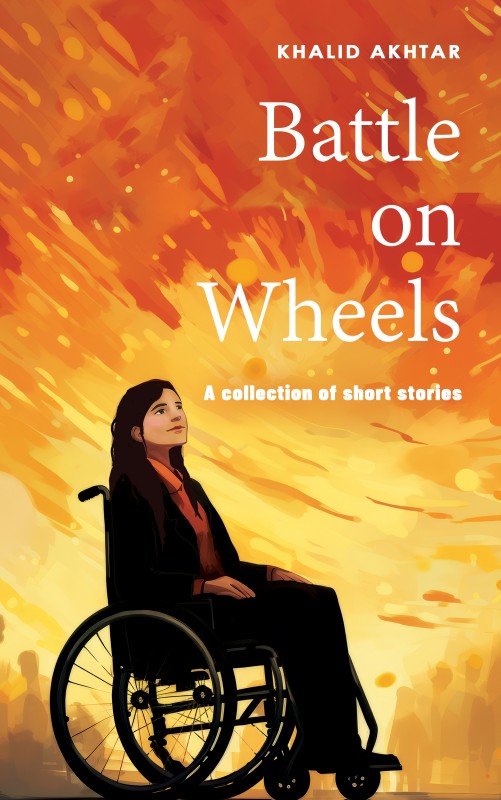
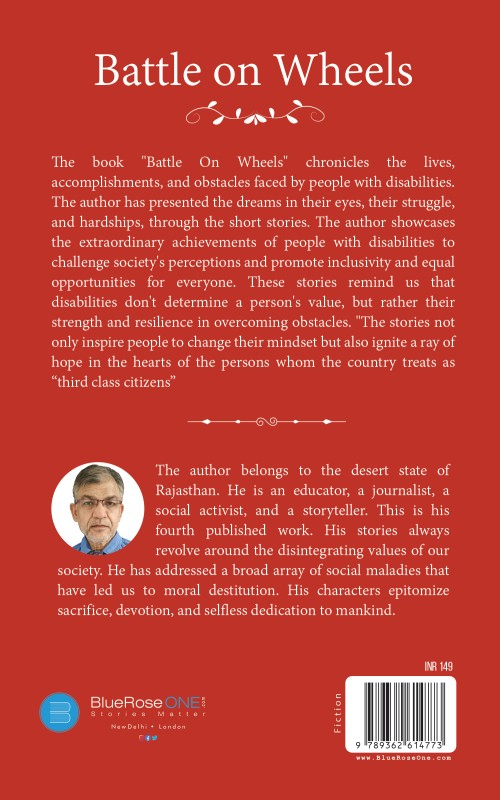
Battle On Wheels
by KHALID AKHTAR | 25-Jun-2024

Original
Books
Fastest
Delivery
7-day
Replacement
Book Details
- Language : English
- Pages : 112
- ISBN : 9789362614773
- Genre: FICTION
- Size : 5" x 8"
- Binding Type : PAPERBACK
- Age Group: + Years
- Paper Type : NATURAL SHADE
- Interior : BLACK & WHITE
- Cover : MATTE FINISH
- Book Type : PAPERBACK
- Tags : Battle On Wheels
-
Best Sellers Rank :
#2337 in Fiction
#8633 in Global
Reviews
-

Dr M Iqbal Siddiqui
17-12-2025Book Review: A Moving Portrait of Courage and Compassion Battle on Wheels By Khalid Akhtar BlueRose Publishers, London/New Delhi (Short story collection) Khalid Akhtar’s Battle on Wheels is a stirring and compassionate collection of short stories that brings to the forefront the lived realities of persons with disabilities—realities often overlooked in mainstream literature. What distinguishes this book is its moral clarity: Akhtar does not seek sympathy for his characters; he demands dignity for them. He calls for a shift from charitable paternalism to a rights-based, humane understanding of disability—an appeal woven into the emotional fabric of every story. Akhtar approaches his subjects with a deep sense of responsibility. The stories are not merely imaginative exercises; they are ethical interventions. Through accessible yet evocative prose, he gives voice to those pushed to the margins—children abandoned by families, widows navigating predatory eyes, workers battling poverty, athletes defying physical limitations, and individuals scarred yet unbroken by violence. The opening story, A Blessed Girl, sets the tone. Meena, herself disabled and neglected in childhood, becomes a pillar of hope for abandoned children. The narrative not only exposes societal cruelty but also celebrates the transformative power of empathy. In Noble Eyes, the bond between a blind teacher and his student evolves into a profoundly moving cycle of guidance and gratitude, culminating in a moment of redemption that feels almost luminous. One of the most inspiring pieces, Weight Lifter, follows Arman, a boy who lost his legs in an accident but refuses to lose his dreams. His journey from a village roadside to winning gold at the National Paralympics is portrayed with remarkable sensitivity, capturing both the grit of physical training and the emotional resilience behind it. Equally compelling is Helping Hand, where an old, paralysed man survives unknowingly through the labour of an anonymous benefactor. The story is a gentle reminder that moral greatness often walks silently among us. Akhtar also explores the intersection of disability with gender. In Like a Man, a widow adopts a masculine appearance to escape harassment and ensure her daughter’s safety—a sharp commentary on the violence embedded in everyday social interactions. The Hijab presents an acid-attack survivor who hides her face not out of shame but to test the sincerity of the world around her. Her climactic revelation is one of the book’s most striking moments, forcing readers to confront the superficiality of societal love. The collection also delves into emotional terrains shaped by regret, guilt, and redemption. So Sorry follows a young man who once avoided a limping classmate, only to find her years later as the principal interviewing him—a poignant reminder of how prejudice can haunt our moral memory. In Marriage in Heaven, a young man refuses to abandon his fiancée after an accident leaves her disabled, insisting that love binds souls, not bodies. Throughout the book, Akhtar’s message remains unwavering: disability is not inability. His characters are not presented as victims but as individuals with agency, aspirations, and inner strength. The foreword by PUCL President Kavita Srivastava rightly notes that these stories enrich a genre still underdeveloped in Indian literature—narratives that place disabled lives at the centre rather than the periphery. Battle on Wheels is not just a literary work; it is a gentle but firm indictment of our social attitudes. It urges readers to move beyond token gestures and recognise the rights, capabilities, and humanity of disabled persons. This collection deserves attention not only for its storytelling but also for its moral vision. It is a timely contribution to the ongoing conversation on inclusion, empathy, and justice. - Dr. M. Iqbal Siddiqui Journalist, Writer