 USD
($)
USD
($) AUD
($)
AUD
($) CAD
($)
CAD
($) EUR
(€)
EUR
(€) HKD
($)
HKD
($) MYR
(RM)
MYR
(RM) GBP
(£)
GBP
(£) SGD
($)
SGD
($)



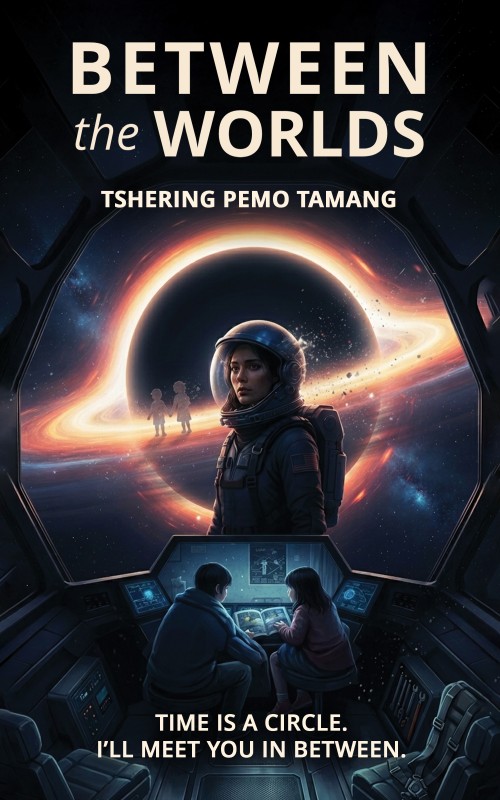
Between The Worlds
by Tshering Pemo Tamang | 15-May-2026
(0)
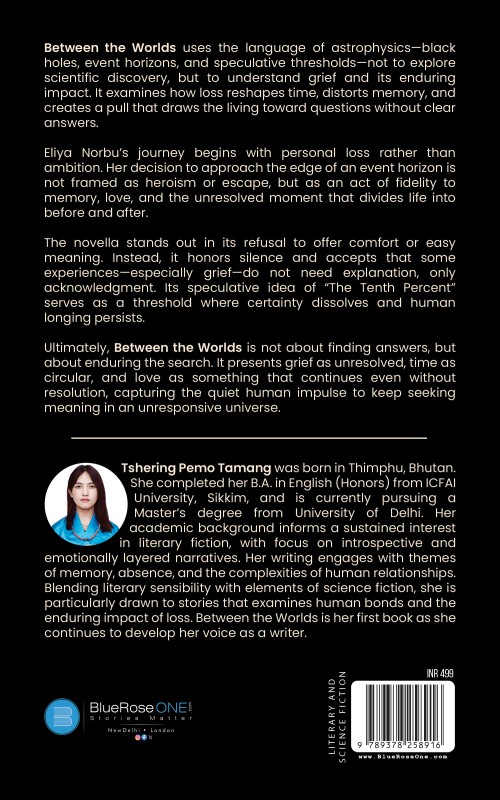
Between the Worlds uses the language of astrophysics—black holes, event horizons, and speculative thresholds—not to explore scientific discovery, but to understand grief and its enduring impact. It examines how loss reshapes time, distorts memory,...

Original
Books
Fastest
Delivery
7-day
Replacement
Book Details
- Language : English
- Pages : 88
- ISBN : 9789378258916
- Genre: FICTION
- Size : 5" x 8"
- Binding Type : PAPERBACK
- Age Group: + Years
- Paper Type : WHITE PAPER
- Interior : BLACK & WHITE
- Cover : GLOSS FINISH
- Book Type : PAPERBACK
- Tags : Tshering Pemo Tamang,Between The Worlds,Literary Science Fiction,Psychological Sci-fi,Philosophical Sci-fi,Existential Fiction,Grief and Trauma Fiction
-
Best Sellers Rank :
#3503 in Fiction
#13041 in Global
Reviews
There are no reviews for this product yet.

Rs.321

Rs.195



Rs.137
Rs.399