 USD
($)
USD
($) AUD
($)
AUD
($) CAD
($)
CAD
($) EUR
(€)
EUR
(€) HKD
($)
HKD
($) MYR
(RM)
MYR
(RM) GBP
(£)
GBP
(£) SGD
($)
SGD
($)



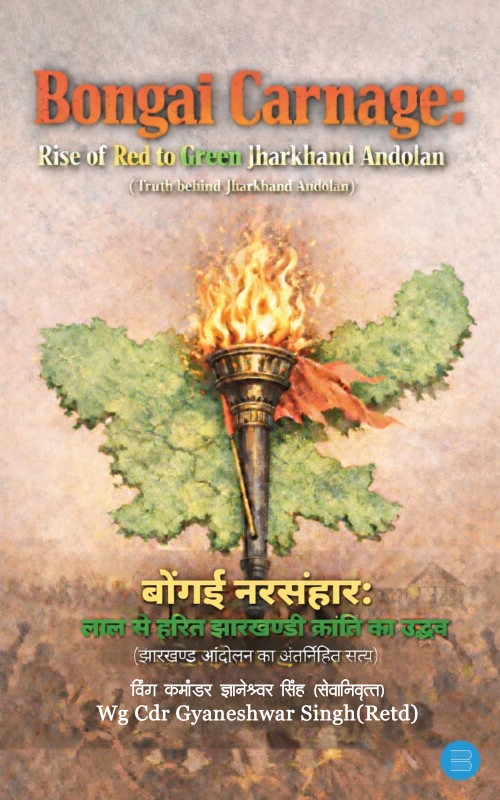
Bongai Carnage: Rise of Red to Green Jharkhand Andolan (Truth behind Jharkhand Andolan)
by Wg Cdr Gyaneshwar Singh Retd | 06-Mar-2026
(0)
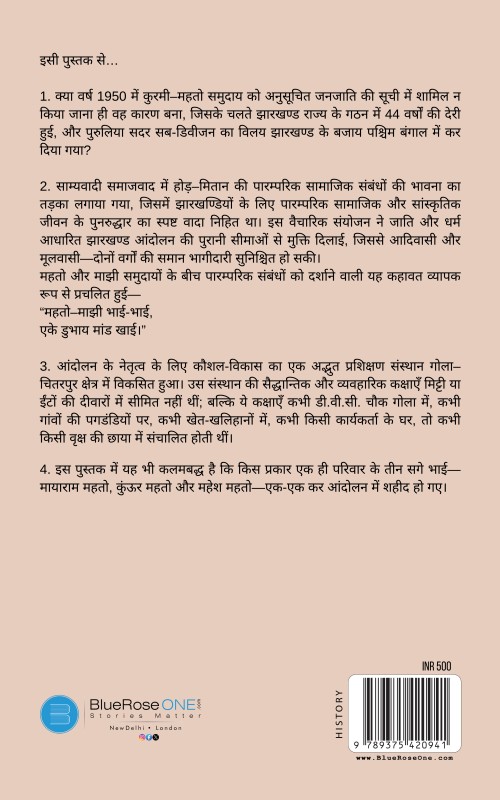
This book presents radically different perspectives on the Jharkhand Andolan.(i) When communist socialism was infused with the ‘Hor-Mitan’ multicultural ethos of Mulbashi and Adivashi traditions, the resulting synthesis became the ideological foun...

Original
Books
Fastest
Delivery
7-day
Replacement
Book Details
- Language : Hindi
- Pages : 158
- ISBN : 9789375420941
- Genre: NON-FICTION
- Size : 5" x 8"
- Binding Type : PAPERBACK
- Age Group: + Years
- Paper Type : WHITE PAPER
- Interior : BLACK & WHITE
- Cover : GLOSS FINISH
- Book Type : PAPERBACK
- Tags : Wg Cdr Gyaneshwar Singh(Retd),Bongai Carnage: Rise of Red to Green,Jharkhand Andolan (Truth behind Jharkhand Andolan),Jharkhand Andolan,Jharkhand movement history,Formation of Jharkhand state,Adivasi and Mulbashi identity,Tribal politics in India,Kurmi–Mahto community,Scheduled Tribes exclusion India,Regional movements in India,Socio-political history Jharkhand,Anti-Mahajan Andolan
-
Best Sellers Rank :
#39 in Historical Fiction
#12450 in Global
Reviews
There are no reviews for this product yet.
Rs.321
Rs.195

Rs.137

Rs.399