 USD
($)
 AUD
($)
 CAD
($)
 EUR
(€)
 HKD
($)
 MYR
(RM)
 GBP
(£)
 SGD
($)




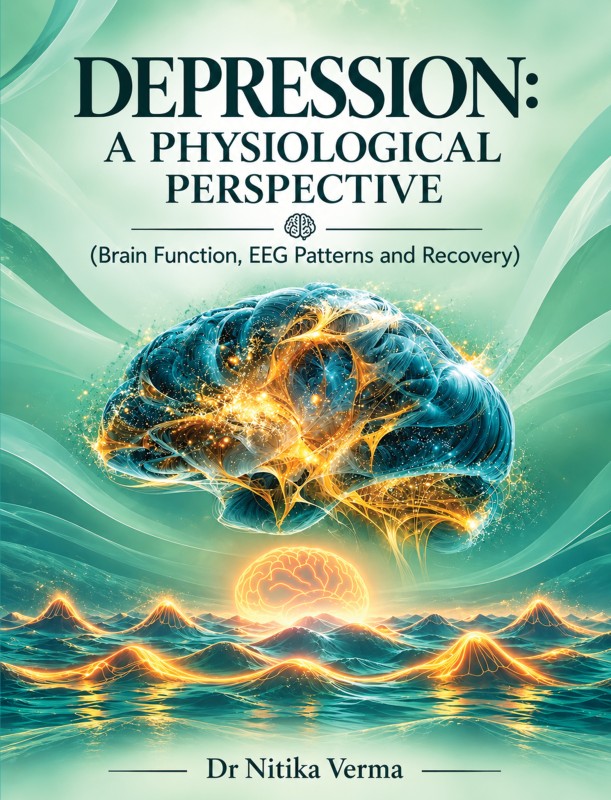

DEPRESSION: A Physiological Perspective
by Dr Nitika Verma | 14-Oct-2026
(0)
DEPRESSION: A Physiological Perspective: Brain Function, EEG Pattern and Recovery presents depression through the lens of human physiology, integrating neurobiology, brain networks, neurotransmission, stress biology, sleep and circadian regulation...

Original
Books
Fastest
Delivery
7-day
Replacement
Book Details
- Language : English
- Pages : 432
- ISBN : 9788117827130
- Genre: ACADEMIC
- Size : 7.25" x 9.5"
- Binding Type : PAPERBACK
- Age Group: + Years
- Paper Type : WHITE PAPER
- Interior : COLOR
- Cover : GLOSS FINISH
- Book Type : PAPERBACK
- Tags : Depression physiology,Neurobiology of depression,EEG in depression,Brain function and depression,Stress and depression,Sleep and depression,Autonomic function in depression,Depression recovery
-
Best Sellers Rank :
#2213 in Academics
#14505 in Global
Reviews
There are no reviews for this product yet.

Rs.321

Rs.195



Rs.137

Rs.399