 USD
($)
USD
($) AUD
($)
AUD
($) CAD
($)
CAD
($) EUR
(€)
EUR
(€) HKD
($)
HKD
($) MYR
(RM)
MYR
(RM) GBP
(£)
GBP
(£) SGD
($)
SGD
($)


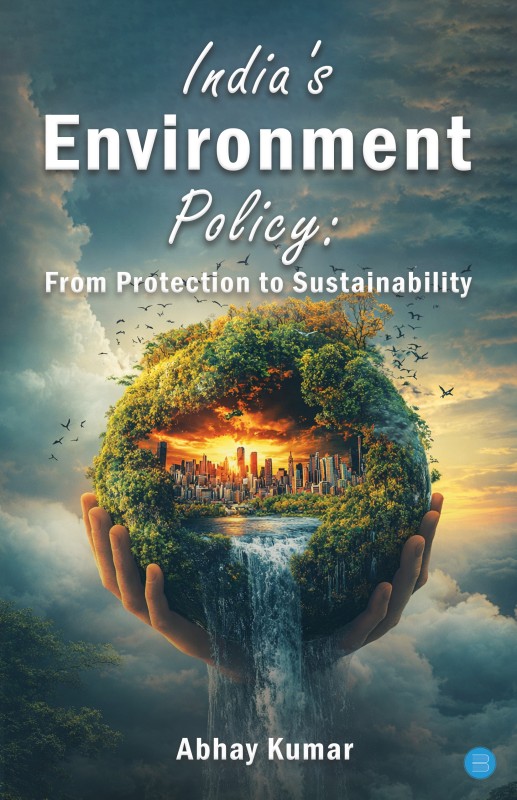
India's Environment Policy: From Protection to Sustainability
by abhaytaxila | 05-May-2026

Original
Books
Fastest
Delivery
7-day
Replacement
Book Details
- Language : English
- Pages : 178
- ISBN : 9789378258428
- Genre: ACADEMIC
- Size : 5.5" x 8.5"
- Binding Type : PAPERBACK
- Age Group: + Years
- Paper Type : NATURAL SHADE
- Interior : BLACK & WHITE
- Cover : MATTE FINISH
- Book Type : PAPERBACK
- Tags : India's Environment Policy From Protection to Sustainability,Abhay Kumar,environmental policy in India,Environmental governance India,Climate Change Policy in India,Sustainable Development India,Biodiversity conservation in India,Environmental Law and Policy in India,Green Economy India
-
Best Sellers Rank :
#2061 in Academics
#12917 in Global
Reviews
-

Farhat Khan
09-05-2026India’s Environment Policy: From Protection to Sustainability by Abhay Kumar is a thoughtful and policy-oriented examination of India’s environmental governance framework and its gradual transition from a narrow “protection” approach toward the broader idea of sustainable development. One of the strongest aspects of the book is its interdisciplinary approach. Rather than limiting itself to environmental legislation alone, the author discuss pollution control, green initiatives, sustainable development theory, and market-based policy instruments such as eco-taxes, subsidies, pollution permits, and refundable deposits. This gives the work practical relevance. The book is especially valuable for explaining how environmental policy interacts with economic development. The book successfully highlights the tension between industrial growth and ecological sustainability, while also arguing that economic instruments can be used effectively to shape environmentally responsible behaviour. Their discussion of Market Based Instruments (MBIs), particularly ecological taxation, stands out as one of the more original and policy-relevant contributions of the book.  The writing style is academic yet accessible. However, the book also has certain limitations. The analysis relies heavily on policy description and institutional review, sometimes at the expense of empirical case studies and field-level evidence. Despite these limitations, the book remains an important contribution to understanding India’s environmental policy evolution. Its greatest achievement is in connecting environmental protection with sustainability-oriented economic governance. The work demonstrates that environmental policy cannot remain isolated from fiscal policy, industrial development, and social welfare concerns.