 USD
($)
USD
($) AUD
($)
AUD
($) CAD
($)
CAD
($) EUR
(€)
EUR
(€) HKD
($)
HKD
($) MYR
(RM)
MYR
(RM) GBP
(£)
GBP
(£) SGD
($)
SGD
($)



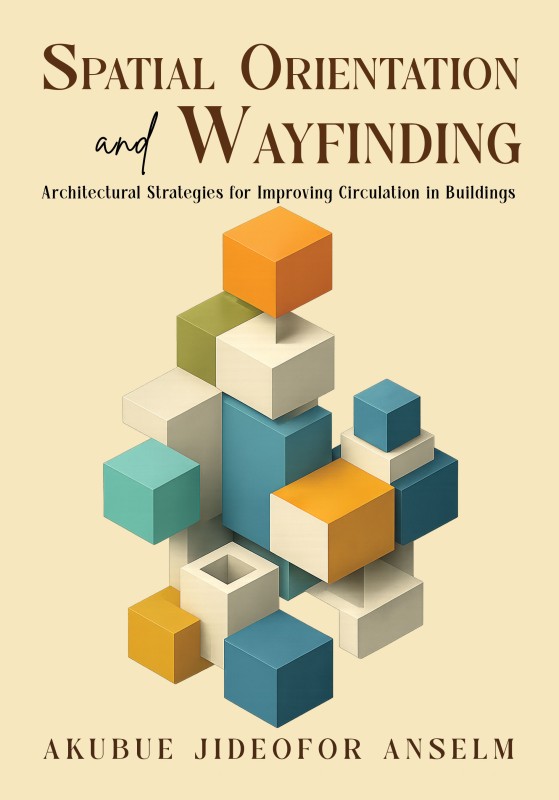
Spatial Orientation and Wayfinding: Architectural Strategies for Improving Circulation in Buildings
by Jideofor Akubue | 27-Jul-2026
(0)
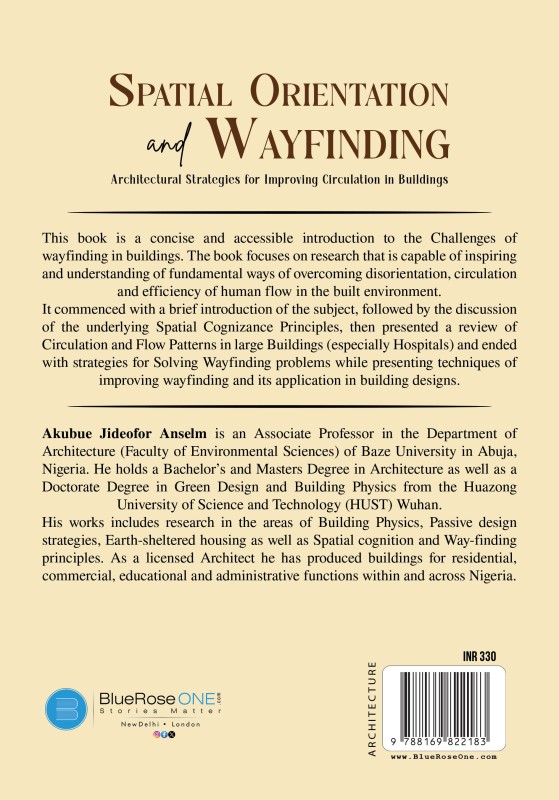
This book is a concise and accessible introduction to the Challenges of wayfinding in buildings. The book focuses on research that is capable of inspiring and understanding of fundamental ways of overcoming disorientation, circulation and efficien...

Original
Books
Fastest
Delivery
7-day
Replacement
Book Details
- Language : English
- Pages : 90
- ISBN : 9788169822183
- Genre: NON-FICTION
- Size : 6" x 9"
- Binding Type : HARDBOUND
- Age Group: + Years
- Paper Type : WHITE PAPER
- Interior : BLACK & WHITE
- Cover : GLOSS FINISH
- Book Type : HARDBOUND
- Tags : Wayfinding Wayfinding in buildings Building wayfinding,Spatial cognition Spatial orientation Building navigation,Human circulation
-
Best Sellers Rank :
#3058 in Non - Fiction
#13762 in Global
Reviews
There are no reviews for this product yet.

Rs.321

Rs.195



Rs.137

Rs.399