 USD
($)
 AUD
($)
 CAD
($)
 EUR
(€)
 HKD
($)
 MYR
(RM)
 GBP
(£)
 SGD
($)




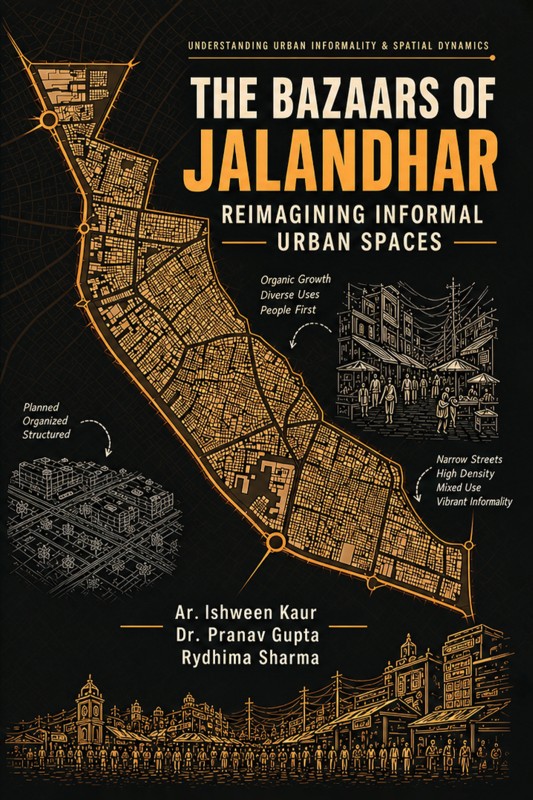
The Bazaars of Jalandhar
by Rydhima Sharma | 05-Nov-2026
(0)
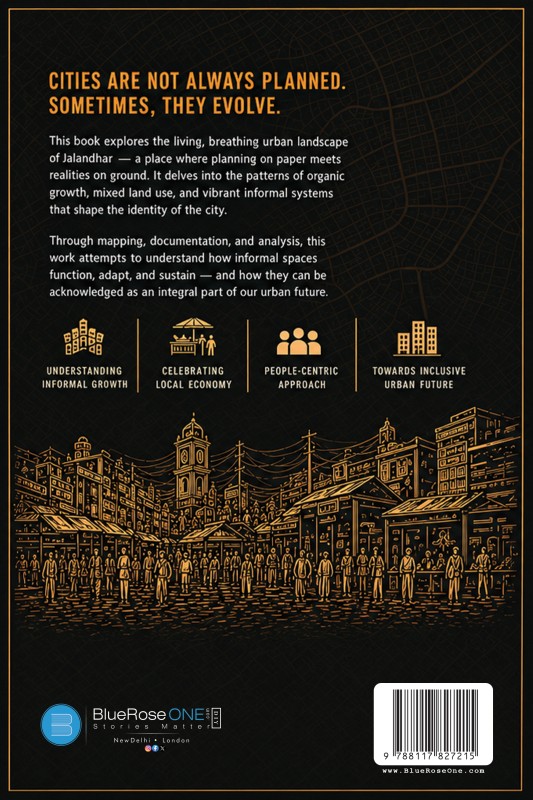
The Bazaars of Jalandhar explores the vibrant relationship between traditional marketplaces, informal economic activities, and the evolving urban landscape of Jalandhar, Punjab. Focusing on Jyoti Chowk and its surrounding commercial areas, the boo...

Original
Books
Fastest
Delivery
7-day
Replacement
Book Details
- Language : English
- Pages : 446
- ISBN : 9788117827215
- Genre: NON-FICTION
- Size : 5" x 8"
- Binding Type : PAPERBACK
- Age Group: + Years
- Paper Type : NATURAL SHADE
- Interior : BLACK & WHITE
- Cover : GLOSS FINISH
- Book Type : EBOOK
- Tags : Urbanism,Bazaars,Jalandhar,Planning,Architecture,Infrastructure,Mobility,Informality,Livelihoods,Governance,Sustainability,Pedestrians,Markets,Urbanization,Punjab
-
Best Sellers Rank :
#3315 in Non - Fiction
#14756 in Global
Reviews
There are no reviews for this product yet.
Rs.160
Rs.321

Rs.195



Rs.137