 USD
($)
USD
($) AUD
($)
AUD
($) CAD
($)
CAD
($) EUR
(€)
EUR
(€) HKD
($)
HKD
($) MYR
(RM)
MYR
(RM) GBP
(£)
GBP
(£) SGD
($)
SGD
($)




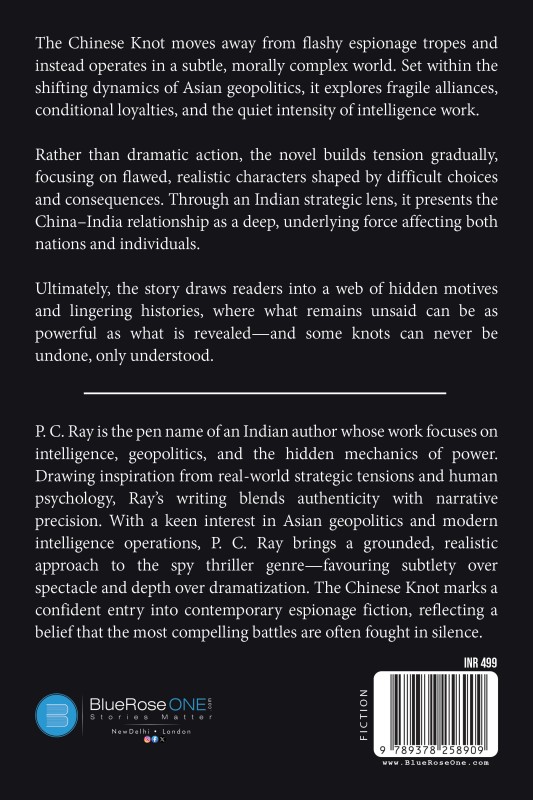
The Chinese Knot
by Pramit Chatterjee | 08-May-2026
(0)
Espionage novels rely on spectacle. The Chinese Knot relies on something more dangerous — restraint.Set against the fault lines of Asian geopolitics, the novel follows a ghost operative back into a world that officially erased him. What begins as ...

Original
Books
Fastest
Delivery
7-day
Replacement
Book Details
- Language : English
- Pages : 263
- ISBN : 9789378258909
- Genre: FICTION
- Size : 6" x 9"
- Binding Type : PAPERBACK
- Age Group: + Years
- Paper Type : NATURAL SHADE
- Interior : BLACK & WHITE
- Cover : MATTE FINISH
- Book Type : PAPERBACK
- Tags : Shadow diplomacy,Covert operations India,Spy thriller Asia,Intelligence tradecraft,Moral cost of espionage.
-
Best Sellers Rank :
#3480 in Fiction
#12973 in Global
Reviews
There are no reviews for this product yet.

Rs.321

Rs.195



Rs.137

Rs.399