
Famous Japanese Books You Must Read Before You Die

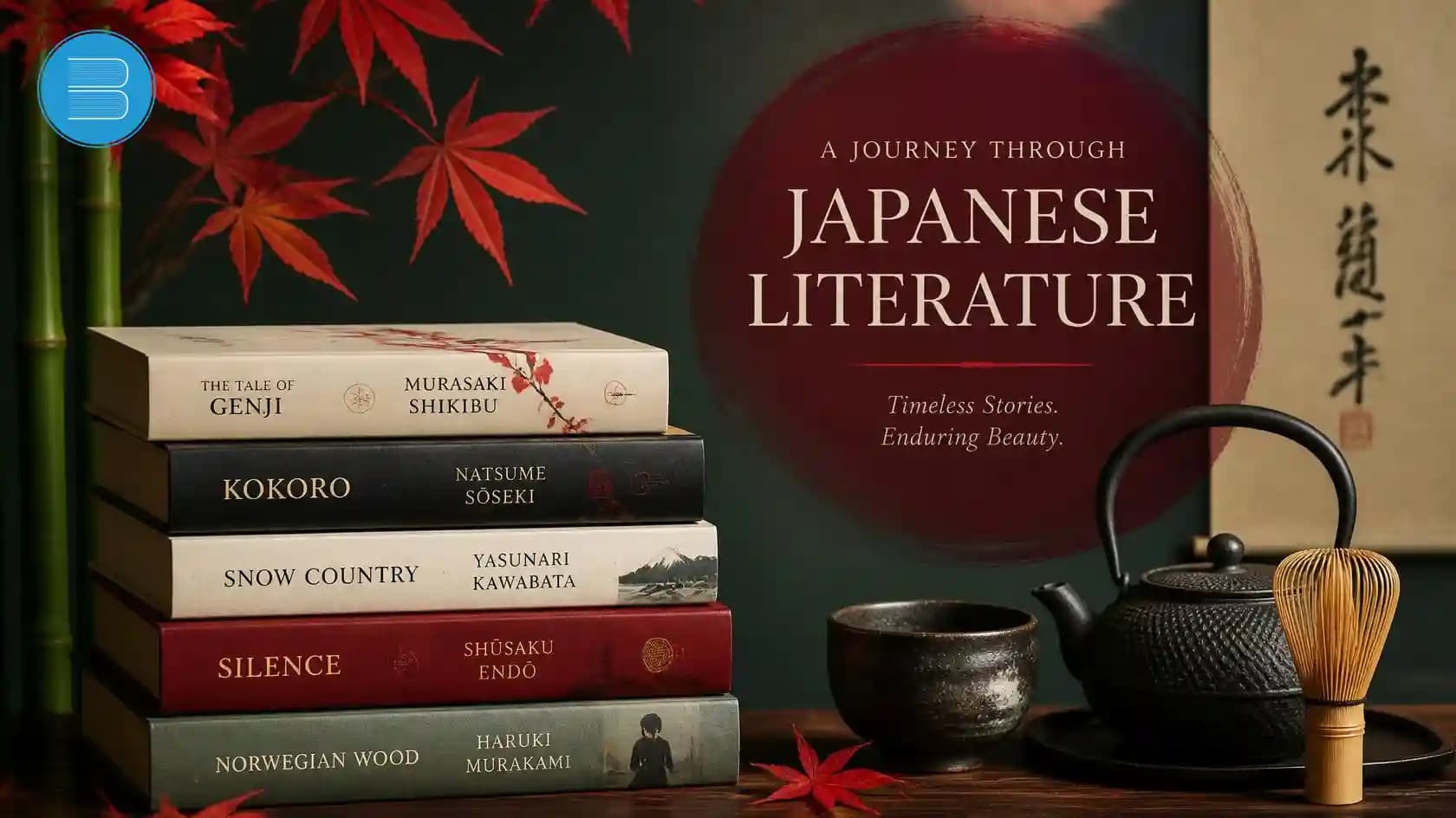
Japanese literature possesses a singular, lingering magic. It can render the quiet drop of an autumn leaf as emotionally devastating as a palace betrayal, or turn the sterile, fluorescent aisles of a midnight convenience store into a profound meditation on human connection. For lovers, poets, authors, and avid readers alike, diving into famous Japanese books is not merely an act of reading, it is a transformation in how you perceive memory, loneliness, beauty, and time.
Whether you want to improve your own creative skills, delve into the nuances of mono no aware (the bittersweet realization of impermanence), or simply lose yourself in an engrossing novel, Japanese fiction provides an extraordinary setting.
In this thorough guide, we will travel through the ages to discover the best Japanese novels of all time, including ancient courtly epics, mid-century existential masterpieces, and modern boundary-pushing literature.
What makes Japanese fiction so appealing? To grasp the fascination of the best Japanese works, consider how Japanese authors handle emotional resonance.
Whereas Western narrative traditions usually focus on external conflict, dramatic climaxes, and heroic transformations, Japanese literature frequently delves inside. It thrives at calm meditation, ambient ambiance, and what is unspoken between the lines.
The Timeless Classics – Famous Japanese Books
To appreciate modern Japanese storytelling, every serious reader should start with the classics that built the nation’s literary identity.

1. The Tale of Genji by Murasaki Shikibu (11th Century)
Often regarded as the world’s first novel, The Tale of Genji follows the life, relationships, and courtly experiences of Prince Genji in Japan’s Heian era. Written by Murasaki Shikibu, this literary masterpiece explores love, beauty, politics, and human emotions with remarkable depth, making it one of the most influential and famous Japanese books ever written.

2. Kokoro by Natsume Sōseki (1914)
Natsume Sōseki is known as the “father of modern Japanese literature,” and his image has graced the 1,000-yen note for decades. Kokoro (which means “heart,” “mind,” or “feeling”) delves into the relationship between a young university student and his enigmatic older mentor, whom he refers to as “Sensei.”
Set during the transition from the Meiji period to modern industrial Japan, the novel explores themes of guilt, loneliness, and the agonizing cultural shift between traditional values and rapid Westernization.
It is widely regarded as one of the greatest Japanese novels of all time.

3. Snow Country by Yasunari Kawabata (1948)
Yasunari Kawabata became the first Japanese author to win the Nobel Prize in Literature in 1968, celebrated by the Nobel Committee for his narrative mastery with great sensibility. Snow Country tells the tale of Shimamura, a wealthy dilettante, and his doomed affair with Komako, a provincial geisha at a remote hot-spring town in northern Japan.
Kawabata’s prose reads like extended haiku, crystalline, sparse, and hauntingly visual. Learn more about Kawabata’s historic Nobel achievement on The Nobel Prize Official Site.
Post-War Mid-Century Icons: Best Japanese Books
Following World War II, Japanese authors grappled with devastation, loss of national identity, and deep existential dread. This era yielded some of the most haunting and influential best japanese novels of all time.

4. No Longer Human by Osamu Dazai (1948)
One of the most influential Japanese novels of the 20th century, No Longer Human explores alienation, identity, and emotional isolation through the life of Yozo Oba.
Osamu Dazai’s deeply introspective narrative captures the struggles of a man unable to connect with society, making this tragic yet powerful work an enduring classic in Japanese literature.
Dazai’s raw vulnerability resonates powerfully with modern readers, poets, and authors who have ever felt detached from societal expectations.

5. The Temple of the Golden Pavilion by Yukio Mishima (1956)
Yukio Mishima remains one of Japan’s most brilliant yet polarizing literary figures. Inspired by actual events in 1950, The Temple of the Golden Pavilion follows Mizoguchi, a stuttering acolyte obsessed with the overwhelming, unattainable beauty of Kyoto’s Kinkaku-ji temple. His obsession eventually compels him toward an act of tragic destruction.
Mishima’s prose is baroque, philosophical, and intensely cerebral, an essential read for anyone studying character obsession and formal prose craftsmanship.

6. The Makioka Sisters by Jun’ichirō Tanizaki (1948)
Tanizaki’s masterwork is a must-read for anyone looking for one of the best works on Japanese culture before World War II changed everything.
It follows four sisters from an aristocratic Osaka family as they juggle love, marriage plans, and social obligations on the eve of war. It is lush, complex, and incredibly evocative, and it captures a lost way of life in devastating detail.
Contemporary Giants: Famous Japanese Books of All Time
In recent decades, modern Japanese literature has exploded worldwide, capturing global bestseller lists with innovative blends of surrealism, urban loneliness, and cozy slice-of-life charm.

7. Norwegian Wood by Haruki Murakami (1987)
No conversation about famous Japanese books is complete without Haruki Murakami. While works like Kafka on the Shore and The Wind-Up Bird Chronicle feature talking cats and dreamscapes, Norwegian Wood is his most grounded, personal novel.
Set in 1960s Tokyo amid student protests, the story follows Toru Watanabe as he looks back on his college years and his tender, tragic relationships with two distinct women: the quiet Naoko and the vibrant Midori. Steeped in nostalgia and soundtracked by 60s rock, it remains a global gateway into contemporary Japanese fiction.

8. The Memory Police by Yōko Ogawa (1994 / English Trans. 2019)
On an unnamed island, objects are quietly disappearing from existence—birds, roses, ribbons, photographs. When an item vanishes, the island’s inhabitants forget its existence entirely, enforced by the ruthless Memory Police.
A young novelist discovers her editor is among the rare few who retain their memories, and she hides him beneath her floorboards.
Ogawa’s quiet, allegorical masterpiece explores what remains of art, love, and humanity when our memories are systematically erased. It is an unforgettable read for writers reflecting on the power of the written word.

9. Convenience Store Woman by Sayaka Murata (2016)
Thirty-six-year-old Keiko Furukura has worked in the same Tokyo convenience store (konbini) for 18 years. While society pressures her to find a “real career” or get married, Keiko finds comfort, order, and purpose in the rhythmic chimes and manual labor of her store.
Hilarious, poignant, and delightfully weird, Murata’s novel offers sharp social commentary on modern Japanese corporate culture and societal pressure to conform.

10. Before the Coffee Gets Cold by Toshikazu Kawaguchi (2015)
In a small back-alley Tokyo café, customers are offered a unique chance: they can travel back in time, but only for as long as it takes for a cup of coffee to cool. There are strict rules—you cannot change the present, and you cannot leave your chair.
This charming, heartwarming novel demonstrates how Japanese fiction can blend soft fantasy with profound emotional healing.
Exploring Modern Famous Japanese Books
Beyond literary mainstays, Japanese mystery, crime, and cozy slice-of-life fiction offer incredible depth for readers seeking engaging page-turners.

11. The Devotion of Suspect X by Keigo Higashino (2005)
Keywords: Detective Galileo, logic puzzle, crime fiction
Keigo Higashino is a titan of Japanese crime writing. In The Devotion of Suspect X, a single mother accidentally kills her abusive ex-husband. Her quiet neighbor, a brilliant high school math teacher, devises an intricate cover-up that pits him against a brilliant physics professor aiding the police. It is a cerebral battle of wits where you know who did it from page one, but spend the entire book trying to figure out how.

12. Kitchen by Banana Yoshimoto (1988)
Keywords: Healing, grief, unconventional family
Banana Yoshimoto’s debut novel Kitchen became an instant worldwide cultural phenomenon. It follows Mikage, a young woman grieving the loss of her grandmother, who finds solace in kitchens and the warmth of an unconventional family that takes her in. Yoshimoto’s writing is gentle, soothing, and deeply comforting.
Conclusion
Reading famous Japanese books is more than just turning pages, it is an invitation to pause, feel deeply, and see the world through a nuanced aesthetic lens.
From the ancient corridors of Heian court life in The Tale of Genji to the neon-lit, melancholic streets of modern Tokyo in Norwegian Wood, these masterpieces offer infinite inspiration for authors, poets, and readers alike.
Which Japanese classic will you add to your reading list first? Share your thoughts or favorite Japanese authors in the comments below.



0 Comments