
Hamnet Book Review & Summary by Maggie O Darrell

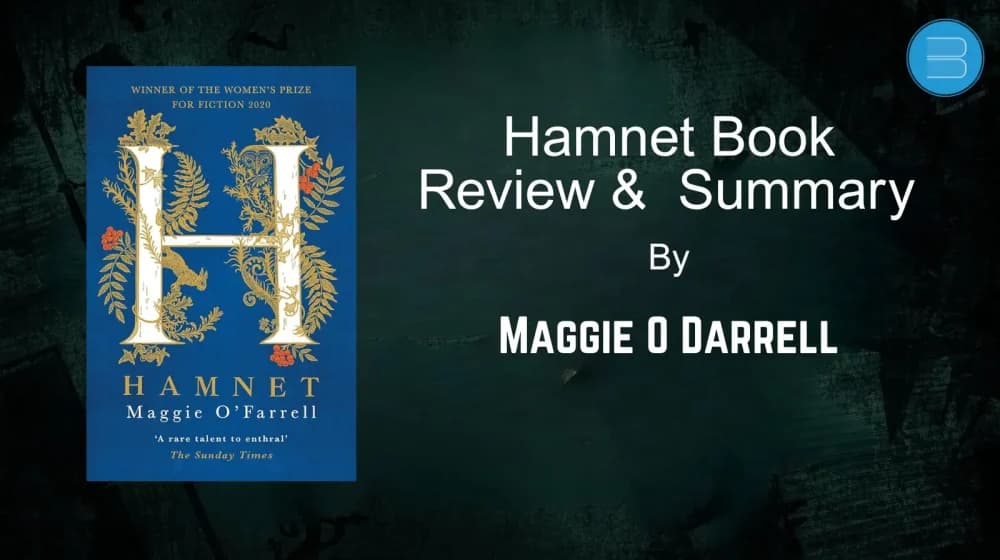
Hamnet is a historical novel written by Maggie O’Farrell and published in 2020. It has been described as one of the most powerful works of literature in the beginning of the 21st century and tells the story of Hamnet, the son of William Shakespeare, through the eyes of those who loved him.
While the story revolves around his life and death, at its core it is about how love is inextricably intertwined with all that is left behind and how this is represented through memory and creative expression/Art.
In the following 2026 publication, we will take a close look at the plot, characters, themes, and writing style in addition to the critical acclaim the novel received when it was first released and the recent film adaptation which has renewed interest and recognition for Hamnet on a worldwide scale.
What You Will Find Inside the Guide
Introduction to Hamnet

Hamnet was published in 2020 by Tinder Press and won major literary awards including the Women’s Prize for Fiction and the National Book Critics Circle Award. It was also published in Canada under the title Hamnet & Judith.
While based on historical facts, chiefly the real death of Shakespeare’s only son at age 11 in 1596, the novel fills in the gaps of historical record with imaginative, empathetic storytelling.
O’Farrell’s narrative is not a straightforward biography of Shakespeare; instead, it turns the spotlight on the emotional interior of a family shattered by tragedy.
You may also read: 100+ Best Love Story Titles (2026): Find Your Next Hit!
Summary of the Plot
The novel is structured into three interwoven strands: the life of young Hamnet, the backstory of his parents’ relationship, and the devastating aftermath of his death.
Early Life and Family Life
The novel begins at Hamnet’s home in Stratford-upon-Avon, where he lives with his twin sister Judith. One day, Hamnet must seek out help when Judith becomes suddenly ill and there is no one home to help her.
Throughout the book, we learn how William Shakespeare met Agnes, the historical figure known as Anne Hathaway, when he worked as a Latin teacher.
O’Farrell has named Agnes foreshadowing David’s view of Agnes, a woman that represents an alternative view to her husband’s fame. Agnes is shown as very much in touch with nature and a practitioner of herbal medicine and other natural cures.
Their first meeting and eventual marriage are shown as unconventional and passionate, giving the reader a sense of how they laid the foundations of their emotional life together for the rest of their lives.
The Plague and Hamnet’s Death
As the novel progresses, the plague sweeps through Stratford, a historically documented deadly outbreak that shuttered public life across England.
O’Farrell’s plague is both historical backdrop and narrative engine: fear of contamination keeps the family physically separated at critical moments, and the invisible disease becomes a metaphor for helplessness and loss.
Hamnet’s twin sister Judith falls ill first. Despite Agnes’s desperate care, the sickness spreads. Hamnet, trying to help, ultimately succumbs to the plague himself.
His death is rendered with heartbreaking immediacy: O’Farrell’s prose captures the chaos, the ritual of burial, and the silent space where a family once lived.
Aftermath and Creative Resurrection
Through the family, specifically Shakespeare and Agnes, as they grieve together we see how each reacts differently to their loss; for example, while Agnes isolates herself out of feeling guilty about Hamnet (and may be affected by what happened) once again distancing herself towards creating or connecting with someone else;
Shakespeare returns from London late with much sorrow but unable to say goodbye to Hamnet; therefore, it’s believed that the loss of Hamnet could have been significant in many respects towards the theatre production “Hamlet”.
However, while it appears that Hamnet’s death may be the catalyst to create the play “Hamlet” O’Farrell does not suggest a direct birth relationship between artists grieving and transforming art. The author suggests instead that there is a profound and very unpredictable manner in which grieving will change art and artists.
You may also like: What Is Ethos? Definition, 15+ Examples & Writing Tips (2026 Guide)
You may also read: 250+ Creative Poem Ideas: Spark Your Inspiration Now!
Major Characters
Hamnet
Though Hamnet’s life is brief within the narrative, his presence dominates the emotional landscape of the novel. O’Farrell gives him curiosity, affection, and vulnerability, a vivid portrait of childhood halted. His twinship with Judith underscores themes of identity and loss.
Agnes (Anne Hathaway)
Agnes is the gravitational center of Hamnet. Not a passive historical figure, she is portrayed as perceptive, intuitive, and deeply tied to the natural environment.
Her grief after Hamnet’s death becomes the novel’s most visceral thread. Readers recognize her struggle to reconcile what she knew of her child with what remains after his absence.
William Shakespeare
Shakespeare appears as a thoughtful but emotionally distant figure, driven by his craft yet vulnerable in his familial relationships. O’Farrell’s Shakespeare is not merely the celebrated playwright of Romeo and Juliet or A Midsummer Night’s Dream, but a man shaped by absences and silences as much as by applause and language.
Judith and Susanna
Judith Hamnet’s twin, embodies survival and the complex interplay of identity and loss. Susanna, the eldest sibling, becomes a pillar of practical strength and emotional endurance. The novel’s portrait of family intertwines these characters’ arcs, showing how sorrow reshapes relationships and roles.
You may also like: 50+ Popular Tropes in Book Writing: Master Every Genre Today!
Themes and Literary Devices
Hamnet’s richness lies in its thematic depth and stylistic choices. O’Farrell’s narrative invites reflection rather than delivering simple answers.
Grief and Mourning
At its core, Hamnet intensely explores the experience of loss, personal, familial, and communal. O’Farrell shows grief as neither linear nor rational, but as a force that reshapes identity and daily life. Rather than offering closure, the narrative illuminates how absence becomes part of the texture of life.
Family and Memory
The novel’s meditation on memory underlines how those we love continue to inhabit our lives after they are gone. Memory becomes a form of legacy, a way to “preserve” the vanished. This theme intersects with how art, whether Shakespeare’s plays or Agnes’s domestic rituals — serves as a mechanism of remembrance.
Twinship and Doubling
Twins Hamnet and Judith are presented as mirror images: entwined identities fractured by death. This motif of doubling echoes larger thematic concerns: loss and survival, presence and absence, life and art.
The Creative Impulse
While Hamnet is not about Shakespeare’s plays per se, O’Farrell frequently gestures toward how personal experience informs artistic creation. The unnamed father’s return to London and immersion in writing suggests that creative expression and grief are intertwined rather than separate.
You may also read: Direct Characterization: Definition, Examples & Tips (2026 Guide)
Literary Style
Hamnet has an intensely immediate feel, with O’Farrell using historical detail and emotions in a compelling way. The third-person present tense provides the work with urgency and brings the meeting of past and present to life for a contemporary audience.
Some readers view the immersive nature of O’Farrell’s writing as creating intimacy and evocativeness, while others find the prose to be overly elaborate, with many instances of lengthy descriptions of sensory detail.
The varying interpretations of O’Farrell’s style highlight Hamnet’s engagement with different reader preferences in regard to historical fiction.
Critical Reception and Cultural Impact
In Hamnet’s initial release, it quickly became clear that this novel would be heralded for its emotional strength and uniquely inventive style. What stands out in reviews is the way Hamnet captures the author’s poignant vision of grieving, perhaps more so than almost any contemporary work.
Outside of its overwhelming appreciation, however, there are mixed feelings among readers regarding whether certain stylistic elements (detailed descriptive passages and more fluidity within storyline) will appeal to all audiences.
Discussions on internet forums show a wide variety of opinions based on several different criteria, ranging from sheer admiration to discontent with inconsistent pacing/plot development.
You may also read: 35+ Juxtaposition Examples: A Masterful Guide!
You may also like: Book Trim Size Guide: Pick the Best Standard Dimensions!
The 2025–2026 Film Adaptation
Hamnet was brought back to mainstream awareness when the Oscar-winning film director Chloé Zhao directed a film version of it with Jessie Buckley portraying Agnes and Paul Mescal portraying William Shakespeare.
The film debuted at major film festivals, including Telluride, and it won the People’s Choice Award at TIFF, which is regarded as a strong indicator of future Oscar nominations and wins.
The film was awarded the Best Motion Picture Drama Golden Globe in early 2026 and Buckley won the Golden Globe for Best Actress.
Reviewers praised the adaptation for highlighting the emotional landscape of Hamnet and not being a traditional historical epic; the filmmakers used visual storytelling to emphasize themes of love and loss.
Final Thoughts
Hamnet is more than a historical novel; it is a meditation on loss, love, and the ways in which absence shapes life. Maggie O’Farrell’s evocative prose and emotional depth create a work that stays with readers long after the final page.
Whether you come to Hamnet for Shakespeare, for its lyrical depiction of grief, or for its rich character study, you’ll find a narrative that rewards close attention and compassionate reading.
For anyone seeking a novel that combines historical richness, emotional insight, and literary artistry, Hamnet remains a standout work of the decade.



0 Comments