
How to Write Crime Fiction: A Step-by-Step Guide

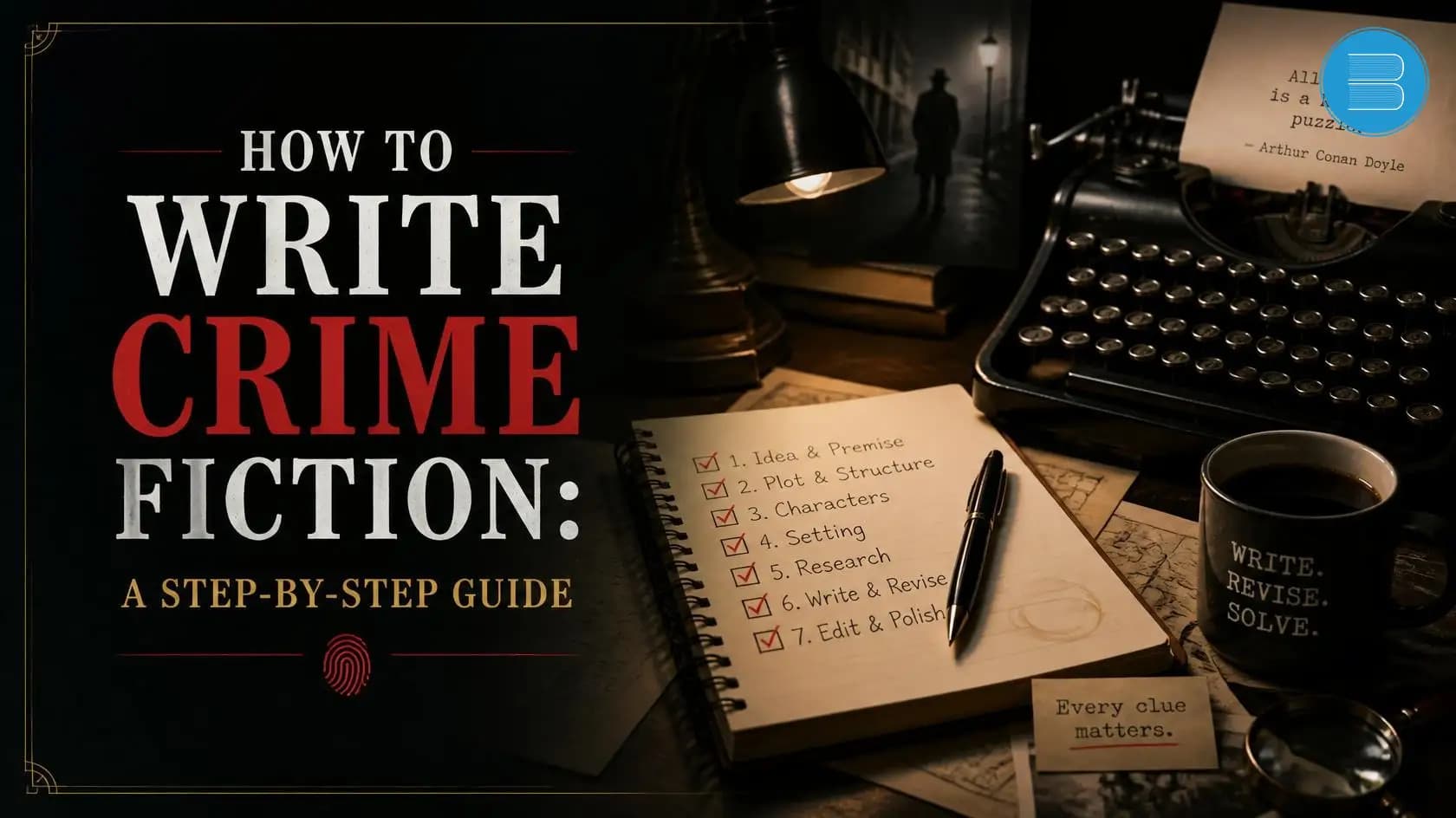
Every great criminal thriller starts with a simple, riveting question: whodunit, how, and why? To write a compelling novel in this genre, you must strike a balance between strong structure and psychological depth.
Whether you want to learn how to write a crime novel from the start, develop a classic detective story, or create a complex murder mystery, this guide covers the step-by-step framework required to keep readers turning pages until the big reveal.
Table of Content

Steps to Write a Crime Fiction
1. Choose Your Subgenre and Core Promise
Before writing, decide what type of crime fiction you want to create—cozy mystery, police procedural, psychological thriller, noir, or legal crime.
Then define your story’s core promise: the mystery, danger, or emotional experience readers can expect. A clear subgenre keeps your plot focused and your audience engaged.
- Cozy Mystery: Focuses on amateur sleuths, off-page violence, and close-knit communities (e.g., Agatha Christie’s Miss Marple).
- Procedural: Focuses on realistic investigative methods, forensics, and professional law enforcement (e.g., Michael Connelly’s Harry Bosch series).
- Hardboiled / Noir: Features cynical protagonists, moral ambiguity, and gritty urban settings (e.g., Raymond Chandler’s works).
- Psychological Thriller: Driven by paranoia, unreliable narrators, and emotional manipulation rather than purely forensic clues.
2. Develop a Multi-Dimensional Sleuth and Foil
Create a detective with strengths, flaws, personal stakes, and motivations that extend beyond solving the crime. Give your sleuth a compelling foil who challenges their methods, beliefs, or personality.
Their contrasting perspectives can create tension, reveal hidden clues, and make the investigation more unpredictable. A well-developed duo keeps readers emotionally invested while adding depth to the mystery.
Your protagonist drives the investigation, while their partner or adversary provides contrast.
- Flaws and Obsessions: Give your investigator a compelling reason to pursue the case beyond professional duty.
- Distinct Skill Set: Ensure their investigative methods—whether hyper-observant, empathetic, or forensic—feel earned.
- The Counterpart: Pair your lead with a foil to draw out dialogue and expose character flaws naturally.
You may also like: How to Write Adventure Fiction: The Ultimate Step-by-Step Guide
3. How to Write a Murder Mystery Novel Plot
Begin by developing an intriguing crime, a plausible motivation, and a cast of suspects with secrets to keep. Create your narrative around clues, red herrings, rising tension, and well-timed disclosures.
Give your detective a specific purpose as they gradually find the truth.
Finally, make sure the solution is shocking but logical, so readers can look back and understand how the clues fit together.
| Plot Stage | Purpose in Crime Fiction |
| Inciting Incident | The discovery of the crime or body that disrupts the status quo. |
| Initial Investigation | Gathering evidence, interviewing primary witnesses, establishing alibis. |
| Midpoint Twist | A major revelation (e.g., a false lead collapses, a second crime occurs). |
| Rising Action | The stakes become personal; the culprit actively works against the sleuth. |
| Climax | The final confrontation where the sleuth exposes the perpetrator. |
4. Master Clues, Red Herrings, and Misdirection
A compelling crime story balances genuine clues with believable red herrings. Plant evidence that rewards careful readers without making the solution obvious.
Use misdirection to shift suspicion naturally, but ensure every clue serves a purpose. The best mysteries surprise readers while making the final revelation feel logical and satisfying in hindsight.
The secret to keeping readers hooked is mastering the art of the clue.
- Fair-Play Clues: Provide readers with all the necessary details to solve the mystery alongside the protagonist. Refer to Crime Writers’ Association resources for classic genre guidelines and best practices.
- Red Herrings: Introduce plausible alternative suspects or misinterpretations of evidence without resorting to cheap tricks or deus ex machina solutions.
- The Hidden in Plain Sight Technique: Mention a critical clue early on when the reader’s attention is focused on high-stakes drama or emotional dialogue.
5. Build Suspense and Control Pacing
Suspense keeps readers reading pages, and tempo affects how swiftly the tale progresses. Gradually reveal clues, provide unexpected turns, and pose fascinating questions that demand answers.
Balance strong action with quieter investigation moments to allow readers to ponder their insights. To keep the excitement going in your crime fiction, end chapters with unsolved questions, new evidence, or unexpected disclosures.
Shorten Chapters Near the Climax: Accelerate the reading speed as the investigation intensifies.
Use Micro-Tension: Ensure every individual scene contains conflict, even during simple witness interrogations.
End on Mini-Cliffhangers: Close chapters with unexpected discoveries, broken alibis, or new threats.
Conclusion
Writing compelling crime fiction is an exercise in structural precision and character study. By establishing clear subgenre rules, planting fair-play clues, and building relentless suspense, you can craft a mystery that keeps readers guessing until the final page. Outline your crime, design your detective, and start writing your first chapter today.
Frequently Asked Questions
How do I outline a crime novel if I am a pantser?
Even writers who do not outline fully should know three key elements before starting: the identity of the culprit, the real motive, and the critical clue that reveals the truth.
What is the average word count for a crime novel?
A standard debut crime or mystery novel typically falls between 70,000 and 90,000 words. Procedurals requiring detailed legal or forensic exposition may skew slightly longer.
How do I avoid obvious plot holes in my investigation?
Create an independent “Crime Timeline” that tracks the culprit’s exact movements step-by-step, completely separate from your sleuth’s sequence of discovery.


0 Comments