
AI and the Future of Novels: Will Writers Be Replaced?

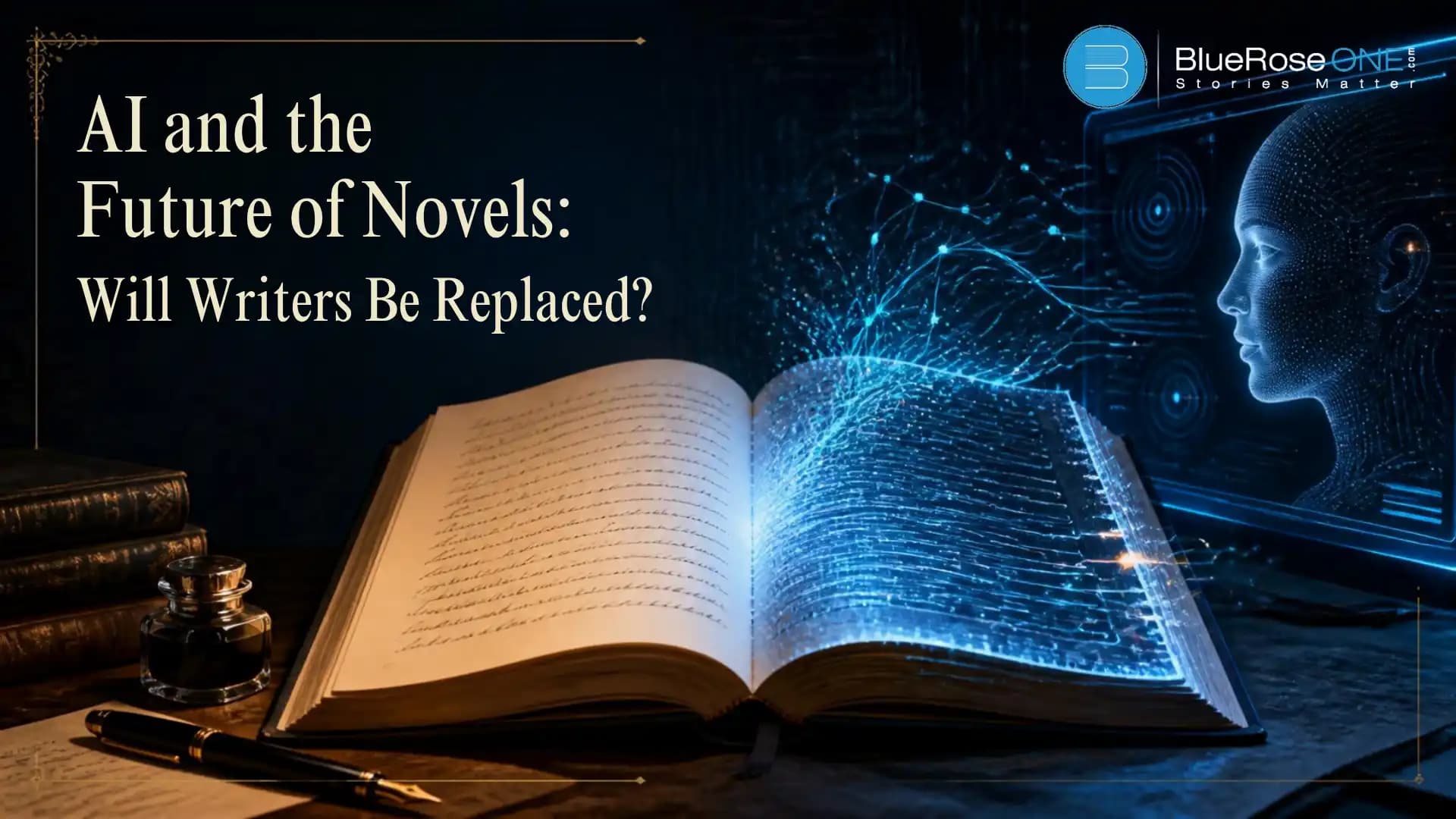
The tools of the novelist have remained relatively unchanged for centuries: imagination, language, observation, memory, and a blank piece of paper. In today’s world, there is a new tool that has joined the list: artificial intelligence.
AI can provide ideas for plots, generate characters, rewrite paragraphs, mimic tone, summarize studies, and create thousands of words in seconds.
This gives rise to a disturbing question about whether the novelist and the art of storytelling will soon be taken over by AI.
This question has a far more complicated answer than just that. While AI does affect the process of novel-writing, novel-writing itself is more than just putting grammatically correct sentences together. The essence of fiction is perspective and emotion and humanity and choice.
Table of Content
- The Rise of AI in Creative Writing
- Can AI Actually Write a Novel?
- The Human Element That AI Cannot Easily Replace
- AI Could Unleash Writers Who Fear the Blank Page
- The Danger of Formulaic Fiction
- AI as the Novelist's Creative Laboratory
- Will AI Make Human Authors Less Valuable?
- The Question of Authorship
- The New Skill: Directing the Machine
- What Writers Should Do Now
- The Future of the Novelist
- Final Thoughts
The Rise of AI in Creative Writing
Artificial intelligence has come a long way from an intriguing future prospect to a writing assistant that provides real help. Contemporary AI can help writers create a premise for their story, make outlines, point out contradictions, create characters and play around with various storytelling options.
For a novice novelist faced with an intimidating white sheet of paper, this can change everything.
A novelist who has a plot of a mystery story in mind but has no idea how to shape the first part can have his AI assistant suggest various options. A novelist struggling with the motivation of the character can use the AI to look at other options.
The revision process can include requests to offer suggestions regarding pacing, repetitions, or clarity.
This shows how useful AI can be when used as a creative companion rather than a replacement of creativity.The difference is crucial. Offering possibilities does not equal understanding which possibility should be a story.
You may also like: Dark Academia Books to Read for Moody Literary Escapes
You may also read: Furthermore Synonyms and Antonyms for Authors: Write Clearly

Can AI Actually Write a Novel?
Indeed, AI can produce a lot of prose equivalent to novel-length writing. However, it does not equate to good writing.
A novel isn’t simply a collection of sentences arranged into chapters. Strong fiction usually depends on elements such as:
- A compelling narrative voice
- Believable characters
- Emotional stakes
- Conflict and tension
- Meaningful themes
- Original perspectives
- Consistent world-building
- Purposeful pacing
- Memorable imagery
- A satisfying emotional journey
However, the author still has to decide how the story should be interpreted and why it should even be written.
An artificial intelligence could perhaps come up with ten different ways to conclude the novel. But the challenging part of the creative process is picking the right way to do that.
The Human Element That AI Cannot Easily Replace
However, the most valuable asset for the novelist is not the vocabulary. This asset is experience.
It is possible to derive inspiration from memories of childhood, relations with people, letdowns, experiences in culture, fears, desires, observations and numerous other common occurrences.
An awkward conversation at a railway station can become the setting for a novel about loneliness. The memory of childhood can form the base of emotions of the character.
AI can analyze the pattern of the already existing text, while the human novelist brings personal experience to the work.
Let us take a character, who experiences the death of the parent. The novelist, who has experienced grief, can see details, which will not be apparent on the mere plot description: the silence after the guests have left, the unwillingness to remove the things of the dead person, the unexpected flash of memory because of some trivial object.
Such details make the fiction credible.
AI Could Unleash Writers Who Fear the Blank Page
If anything is revolutionary about AI’s potential impact on literature, perhaps it’s helping bridge the gap between conceiving and communicating ideas.
There are many individuals who have stories that they want to communicate but cannot figure out how to write them down effectively because of organizational or language challenges.
AI can serve as the scaffolding.
A first-time writer could begin with something as simple as:
“I want to write about an elderly woman who discovers that her childhood home is hiding a family secret.”
From there, AI can help brainstorm characters, conflicts, settings, timelines, and possible plot structures.
But the writer can remain the architect.
This could make novel writing more accessible to people who previously believed they were “not writers.” Instead of replacing storytellers, AI may allow more people to discover that they have stories worth telling.
You may also like: Harry Potter Spells: Learn Their Meanings and Uses
You may also read: Texas Words and Phrases: Learn Local Slang With Ease
The Danger of Formulaic Fiction
There is, however, a major creative danger.
AI programs learn from language and content that have been written before. If authors depend upon them too much, their writing might start sounding formulaic.
Characters might become stereotypical. Story lines may start being predictable. Description might become smooth and bland. The resulting story might be technically proficient, but without its own unique voice.
It raises an intriguing contradiction.
AI can help authors write, but as it becomes easier to create adequate writing, originality becomes all the more precious.
When everyone has access to the same technology, the individual point of view of an author becomes even more crucial.
In the end, perhaps the most successful authors will be those who utilize AI without losing their voice to it.
AI as the Novelist’s Creative Laboratory
One such approach is to consider AI to be an experimental laboratory.
A writer tries out numerous scenarios that do not require any commitment.
What would happen if the antagonist was innocent after all? What if the story would be told from the perspective of the supporting character? What if the revelation takes place midway through the story? What if the setting would move from a bustling city to a small village?
All of these and many more scenarios can be experimented by means of AI.
The writer would reject ninety-nine suggestions and discover a one idea that would inspire him to create something unique.
In essence, this process resembles brainstorming with another person; the only difference being that the latter happens in milliseconds.
The most important thing is that selecting is a creative process.
The ability to choose is becoming a key skill for the novelist.
You may also read: Character Empathy: Build More Believable Characters Today
You may also like: What is Writing Style?: Definition, Examples and Types
Will AI Make Human Authors Less Valuable?
Not necessarily.
History has demonstrated that innovation has the potential to change creative industries rather than render them obsolete.
Word processors have not done away with authors. Digital cameras have not rendered photographers obsolete. Electronic music has not done away with musicians.
On the contrary, the means of production have altered the creative process.
AI is most likely to bring about something of the sort with respect to writing.
Certain traditional activities associated with writing could speed up or even become automated. Such tasks include research organization, proofreading, brainstorming, summarization, and preliminary ideation.
Such changes will give the novelist greater opportunity to engage in creative thinking.
Instead of spending hours trying to find synonyms, one can spend those hours trying to develop the psychological traits of a character. Instead of working on an outline, he or she can concentrate on themes.
With wise use of automation, there is room left for creativity.
The Question of Authorship
Artificial Intelligence raises complex issues of authorship.
When an author employs AI technology for developing the outline of a story, who is the real creator of the story? What if an AI-created paragraph appears in the final manuscript unchanged? At what point will there be too much assistance from the AI for the reader to be informed?
There is no single answer to this question.
The disclosure and copyright expectations could be set differently by different literary communities, jurisdictions, and publishing platforms. Thus, writers have to know the guidelines specific for their publishing platform.
For writers, openness could become a component of building credibility with the audience.
Building of the novelist’s connection with his/her audience is not limited to the novel itself but involves authenticity and expectations of the creation process.
You may also like: Spiciest Romance Books to Heat Up Your Reading List
You may also read: Top 10 Mafia Romance Novels: Find Your Next Dark Love Story
The New Skill: Directing the Machine
The novelist who succeeds tomorrow might not necessarily be the one who writes each sentence by hand.
They could be the one who is capable of guiding the AI system with great creative insight.
This will entail asking more appropriate questions, offering context, spotting poor suggestions, remaining consistent, being an aggressive editor, and making general text personal.
In simpler terms, the novelist will become partially a director.
While the computer can offer the initial text material, the novelist will decide whose role in the play will be played, how the lighting will be, how the scene will end, and how the audience will feel.
The machine will give possibilities.
The human will provide direction.
What Writers Should Do Now
Instead of viewing AI as either dangerous or miraculous, you can take a strategic approach to it as a writer.
First, preserve your unique voice. Do not let AI take over your writing process, allowing your voice to mature and evolve on its own.
Second, employ AI for exploratory purposes. Have it give you new angles on plot development, new questions for characters, new possibilities in terms of structure or editing.
Third, check all facts. Information generated by AI can sometimes be incorrect, particularly in cases involving specific topics.
Finally, hone what is difficult to mimic in AI – namely, your unique point of view, as a person and a creative individual.
The Future of the Novelist
Probably, the future will not feature an all-out war of man against the machine.
Instead, a new ecosystem of literature will emerge.
Some authors will employ AI a lot; some will reject it outright; some will use it just for research and editing; some will see it as a partner in brainstorming sessions. And readers will become increasingly curious not only about the contents of books but also about their creation process.
On the other hand, literary institutions and publishers will set certain expectations regarding issues like disclosure, originality, copyright, and proper use of AI.
However, the novelist will certainly not go extinct merely because machines can write prose.
For a novel starts from a question: What if?
What if a person had made another decision? What if love would withstand decades of separation? What if civilization fell apart? What if a regular person discovered something exceptional?
Such questions come from human curiosity.
AI can assist in answering these questions, suggesting scenes, structures, and expediting revision processes. Yet, it is a very creative task to choose what should be told and why anyone should care about that story.
Final Thoughts
The “ghost in the machine” could be a cautionary tale of artificial intelligence supplanting the creative role of literature. Perhaps it is something much more intriguing: the arrival of a new creative entity, working beside the human imagination.
The speed of composition is increased by AI. The ease of experimentation is increased by AI. The technological barriers to entry are lowered by AI.
But an automated machine that writes sentences is not necessarily a novelist.
The future of fiction may not lie solely in the hands of humans or the machines. It may reside in the hands of those who know how to harness technology but who are able to keep one essential ingredient in their writing intact: a distinctly human voice.
AI can write sentences.
The novelist must interpret what they mean.


0 Comments