
How to Work with A Copy Editor Before Publishing Your Books

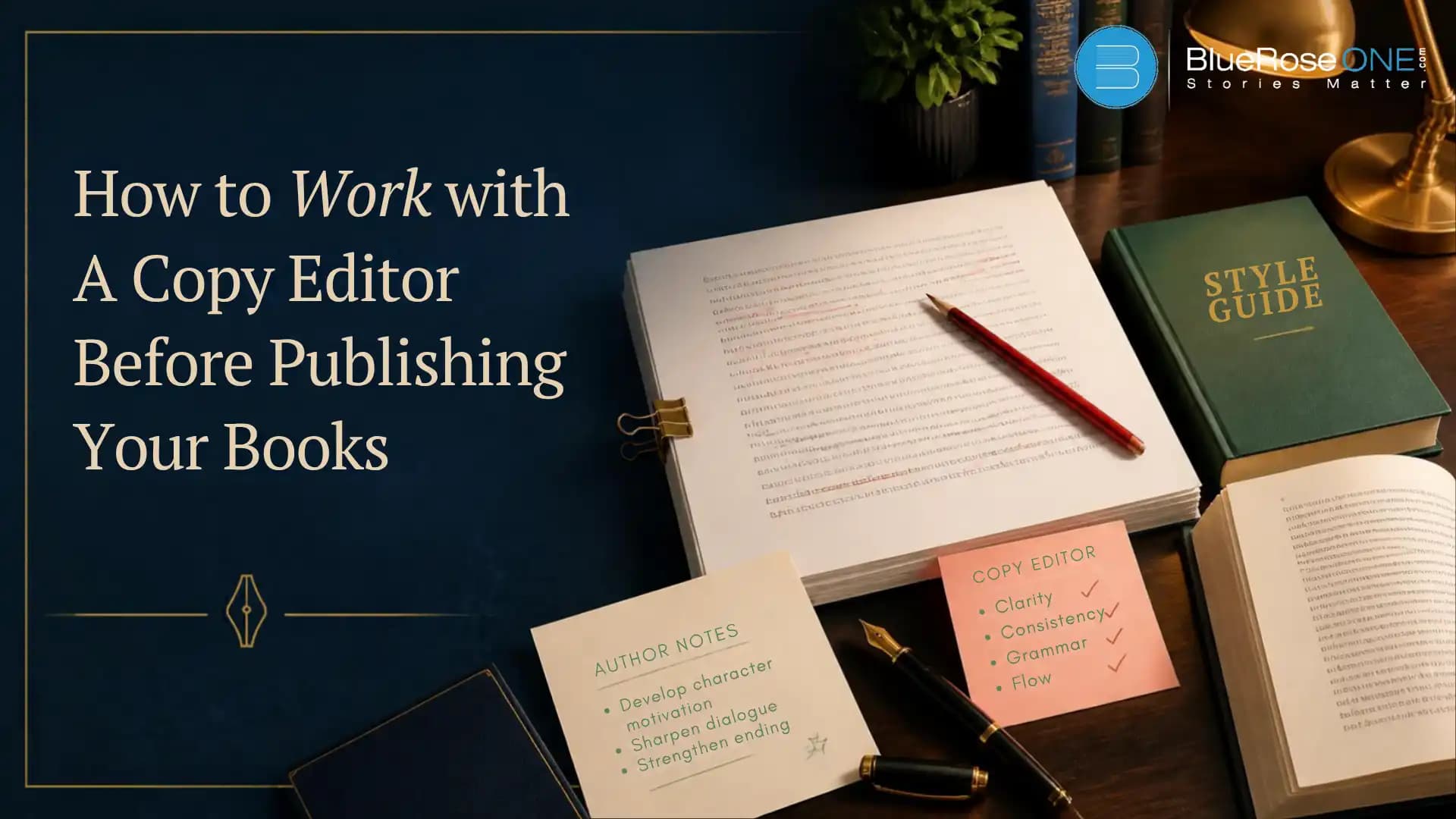
Completing a manuscript can be viewed in the same way as getting to the last page of a journey. The characters have been developed; the plot has been woven; the arguments have been fine-tuned; or all of your thoughts have been put into every single chapter.
However, before publishing the manuscript, there is yet another crucial phase that may significantly affect the publication: copy editing.
A copy editor does not only fix the spelling errors. A copy editor looks through your manuscript to ensure that it is consistent, clear, grammatically sound, punctuated appropriately, uses words correctly, and is readable.
A good copy editor also realizes that a book must continue to sound like the writer even after editing.
Understanding how to edit with a copy editor before publishing your book can help you be more effective in the process.
Rather than considering editing as fixing your writing, consider editing as a cooperative process that helps prepare your manuscript for its readers while preserving the individuality of your writing.
Table of Contents
- What Does a Copy Editor Do?
- Why Should You Work with a Copy Editor Before Publishing?
- Finish Your Manuscript Before Sending It to a Copy Editor
- Decide What Kind of Editing You Need
- Research Potential Copy Editors Carefully
- Ask for a Sample Edit
- Discuss Your Authorial Voice
- Be Clear About the Scope of Work
- Learn How to Review Editorial Changes
- Don't Take Editorial Suggestions Personally
- Ask Questions Instead of Guessing
- Keep a Record of Important Decisions
- Complete the Final Author Review
- Treat Your Copy Editor as a Publishing Partner
- Final Thoughts
What Does a Copy Editor Do?
A copyeditor edits the sentences and paragraphs of your manuscript. It is their job to ensure that your writing is accurate, clear, consistent, and readable.
Depending on the project and the publishing agreement, a copy editor may look for:
- Grammar and punctuation errors
- Spelling and word-choice problems
- Awkward or unclear sentences
- Repetition
- Inconsistent capitalization
- Inconsistent terminology
- Incorrect or inconsistent formatting
- Dialogue punctuation
- Verb tense inconsistencies
- Continuity problems
- Style inconsistencies
- Factual details that appear questionable or contradictory
Copy-editing and developmental editing differ from each other. In developmental editing, emphasis is placed more on structural elements of the book, like the plot, pace, character development, structure, argument, or direction of the story.
For instance, a developmental editor may suggest that a novel writer develop the motivation of the character further. A copy-editor, who does his job after the developmental editor has done hers, will observe discrepancies in the spelling of the character’s name or inconsistency in tenses in different chapters.
The reason why the distinction is important is that it helps you hire the correct editor for your book.
Why Should You Work with a Copy Editor Before Publishing?
Even a seasoned writer could be prone to make errors in his work.
After spending months or even years working with the same piece of work, your mind would become familiar with what you wanted to say.
In the end, you might find yourself reading what you wanted to say instead of what is actually written on paper.
Professional eyes are sometimes needed to spot certain problems.
Copy editing can help your manuscript become:
Clearer: Readers can understand your ideas without unnecessary confusion.
More consistent: Names, terminology, capitalization, spelling, and formatting follow established patterns.
More polished: Grammar, punctuation, and sentence construction receive professional attention.
More readable: Awkward or repetitive wording can be refined.
More credible: Errors can distract readers and undermine confidence in nonfiction, academic, technical, or professional books.
Most importantly, professional copy editing should support your writing rather than erase your personality.
Finish Your Manuscript Before Sending It to a Copy Editor
Among the best things you could do is provide the editor with a manuscript as polished as possible.
Do not send the rough draft of your work just because you are enthusiastic about starting the editing process.
In case you continue revising your major scenes, chapters, arguments, characters, or sections while the copy editor works on your manuscript, already edited passages might require further editing.
Make sure to revise your major revisions before sending the manuscript.
Ask yourself:
- Is the overall structure working?
- Have I finished all chapters?
- Are the characters developed as intended?
- Is the argument complete?
- Have I resolved major plot issues?
- Have I included all important sections?
- Have I removed material I no longer want?
- Is the ending final?
You do not need to believe the manuscript is perfect. In fact, that is why you are hiring an editor. But the manuscript should be substantially complete.
Decide What Kind of Editing You Need
It is not necessary for all manuscripts to be edited at the same degree.
Find out first what it is that you really want from an editor before engaging one.
The minimum of copy editing can include simple grammatical, punctuation, spelling, and consistency checks.
The more extensive copy editing may include sentence structure changes, clarity, repetitions, awkwardness, and stylistic consistency problems.
It may be necessary for some to have proofreading after copy editing and typesetting.
A typical publishing workflow may look something like:
Developmental editing → Copy editing → Formatting/typesetting → Proofreading → Publication
The exact process varies depending on the manuscript and publishing model.
If your manuscript has major structural problems, hiring only a copy editor may not solve them. Likewise, asking a proofreader to perform extensive rewriting may fall outside the scope of proofreading.
Understanding these differences helps you choose the appropriate service.
You may also read: Jester Archetype: Definition, Examples & Writing Tips
Research Potential Copy Editors Carefully
Picking an editor is not just about choosing the cheapest option available.
Make sure that his or her expertise in the field relates to the genre you have written.
For example, a copy editor who has worked on romance fiction books might edit a literary fiction thriller differently than one who has edited academic non-fiction.
When researching editors, consider:
- Editing experience
- Genre familiarity
- Subject-matter expertise
- Professional qualifications
- Client testimonials
- Portfolio or sample work
- Editing style
- Communication habits
- Turnaround time
- Pricing structure
- Services included in the fee
Ask potential editors about their experience with books similar to yours.
The goal is not simply to find someone who knows grammar. You want someone who understands how language works within your particular kind of book.
Ask for a Sample Edit
Sample edits can be very helpful prior to hiring an editor for your complete manuscript.
Send a small excerpt from your book for the editor to show what they will do with it.
A good sample can help you understand whether the editor:
- Makes useful corrections
- Understands your intended meaning
- Respects your voice
- Explains significant changes
- Over-edits sentences
- Identifies recurring issues
- Matches the level of editing you need
Pay attention not only to the number of changes but also to the quality and reasoning behind them.
An editor who changes every sentence is not automatically better than one who makes fewer changes. The purpose of editing is not to demonstrate how much an editor can alter your manuscript.
It is to improve the manuscript where improvement is genuinely needed.
You may also like: AI and the Future of Novels: Will Writers Be Replaced?
Discuss Your Authorial Voice
One of the most critical discussions that occurs between an author and his copy editor is about the voice.
Your book should not emerge from the editing process like it was written by another person.
For instance, your sentence structure in literary fiction will be unique. Or you will have fragments in your humor book to create comedy. You will use syntax in poetry to break the rules of the language. In young adult novels, you will use informal language to match your characters.
All of these should not necessarily be considered errors.
Communicate with your editor regarding the elements of your voice that are intentional.
A good copy editor will be able to differentiate between an error and a style choice.
The point here is not to make all the authors sound the same. The point is to help each one communicate effectively.
You may also like: Character Empathy: Build More Believable Characters Today
Be Clear About the Scope of Work
Before the editor begins, establish exactly what the editing service includes.
A written agreement or clear project brief can prevent misunderstandings.
Discuss:
Manuscript length: Is the price based on words, pages, or the complete project?
Editing level: Is this a light, medium, or substantial copy edit?
Comments: Will the editor explain major changes?
Fact-checking: Is factual verification included?
References: Will citations and bibliographies be checked?
Formatting: Does the editor handle basic manuscript formatting or only language?
Rounds: How many rounds of revisions are included?
Turnaround: When will the edited manuscript be delivered?
Payment: What are the payment terms?
Clarity at the beginning makes the relationship easier for everyone involved.
You may also like: Hasty Generalization: Spot Weak Claims and Write Better
Learn How to Review Editorial Changes
After the copy editor returns your manuscript, do not simply accept every change automatically.
Read through the edits carefully.
Many editing platforms allow editors to use tracked changes or comments. Review each significant suggestion and decide whether it works for your manuscript.
There are several possible responses:
Accept: The correction improves the manuscript and accurately reflects your intention.
Reject: The change does not fit your meaning or style.
Discuss: You are uncertain and want to understand the editor’s reasoning.
This is especially important when the change affects characterization, tone, meaning, or narrative voice.
Remember that the editor is a professional collaborator, but you are still the author.
Don’t Take Editorial Suggestions Personally
This can be one of the hardest parts of working with an editor.
A manuscript can feel deeply personal. You may have spent years developing it. When someone highlights dozens or hundreds of problems, it can feel as though they are criticizing you rather than the text.
Try to separate the manuscript from yourself.
An editor’s job is to identify areas where the writing can be improved. Their comments are about the document, not your worth as a writer.
Even established authors work with editors.
Editorial feedback is part of the publishing process because writing is not always a solitary activity. A thoughtful editor can help you see your manuscript from a reader’s perspective.
You may also like: Dark Academia Books to Read for Moody Literary Escapes
Ask Questions Instead of Guessing
If an editorial change confuses you, ask about it.
For example, instead of silently wondering why a sentence was changed, ask:
“Could you explain why you recommend this revision?”
If an editor flags a phrase as unclear, ask what meaning they initially understood from it.
This creates a valuable conversation.
Sometimes the editor may discover that your original sentence was perfectly intentional. Other times, their explanation may reveal that the sentence communicates something different from what you intended.
That is exactly the kind of discovery that makes editing useful.
Keep a Record of Important Decisions
For longer manuscripts, keep track of recurring editorial decisions.
If the spelling of a fictional place has been standardized, record it.
If a technical term must always appear in a particular form, record it.
If a character’s nickname follows a particular rule, record it.
Your style sheet can become a living document throughout the editing process.
This becomes particularly valuable when writing a series. Without a record of editorial decisions, inconsistencies can creep into later books.
You may also like: Furthermore Synonyms and Antonyms for Authors: Write Clearly
Complete the Final Author Review
After the editor finishes, give yourself time to review the manuscript.
Do not rush immediately from “editor approved” to “publish.”
Read the revised manuscript with fresh attention.
Check:
- Character names
- Chapter order
- Headings
- Quotations
- Numbers
- Dates
- References
- Captions
- Tables
- Recurring terminology
- Formatting
- Changes that affect meaning
If substantial changes were made, consider taking a short break before performing the final review. Distance can help you see the manuscript more objectively.
You may also like: 8 Letter Words: Explore Meaningful Words and Examples
Treat Your Copy Editor as a Publishing Partner
The best relationships between authors and editors are collaborative ones.
You supply the manuscript, creative vision, knowledge on the topic, and the voice of the author.
The copyeditor supplies the fresh perspective, language skill, consistency, and detail.
Neither role makes up for the lack of the other.
If both parties work together, then the process of editing could be far more than just fixing mistakes. It could turn a manuscript which is technically finished into a book that seems well thought out.
You may also like: Texas Words and Phrases: Learn Local Slang With Ease
Final Thoughts
Engaging a copy editor prior to publishing your book is an investment in the reading experience.
An expertly edited book will not remind readers of the editing process. Instead, the reader reads through each page effortlessly, immersed in the story, the thoughts, the characters, the arguments, or the emotions.
The ideal copy edit is one that is invisible.
This means distracting details are removed without taking away the personality from the book. This means clarifying the book’s message without killing the creativity. It means bringing consistency to the language without making all the sentences sound like they came out of a machine.
As a writer, your job is not to write a book that cannot be edited. Your job is to write the best piece you possibly can and remain open to editing.
Hire an editor who understands your genre, share your expectations, ensure your voice is protected, proofread your edits, and give your manuscript a final read prior to publication.



0 Comments